Property managers follow strict inspection checklists when assessing rental properties and even minor cleaning issues can lead to bond deductions. From overlooked skirting boards to grease hidden inside ovens; inspectors are trained to notice details tenants often miss. Understanding these expectations is crucial if you want to avoid disputes and walk away with your bond intact.
When moving out; cleaning is not just about making the place look tidy; it is about meeting specific standards set by the landlord and real estate agents. This article shares proven, practical cleaning tips to help you prepare your rental property and maximise your bond return. With the right strategy and a focus on high impact areas, you can significantly improve your chances of a smooth final inspection.
- Understand the Property Manager's Expectations
- Create a Room by Room Cleaning Checklist
- Focus on High Potential Areas Inspectors Notice First
- Don’t Forget Walls, Windows and Fixtures
- Decide Between DIY Cleaning and Professional Help
- Document Everything Before Handing Over the Keys
- Infographic For Important Tips To Get Your Full Bond Back
- Wrapping Up
1. Understand the Property Manager's Expectations
Before you pick up a mop or vacuum, it is very important to understand what property managers expect during the budget end of lease cleaning Melbourne inspection. The property must be returned in a reasonably clean condition, similar to how it was when you moved in; allowing for fair wear and tear. This usually includes clean floors, appliances, bathrooms, windows and outdoor areas.
Review your original condition report carefully and use it as your benchmark. Pay attention to notes or photos highlighting existing marks, stains or damage. Cleaning beyond this standard is unnecessary but falling short even in small areas can lead to bond deductions or requests for recleaning.
2. Create a Room by Room Cleaning Checklist

One of the biggest mistakes tenants make is cleaning randomly without a structured plan. A room by room checklist ensures nothing is missed and helps you manage time effectively. Break down tasks for each area: kitchen, bathroom, bedrooms, living spaces, laundry, and outdoor areas.
This method also allows you to prioritise high impact areas that inspectors focus on most, such as kitchens and bathrooms. Completing one room fully before moving to the next gives a visible sense of progress and reduces the risk of overlooking small but important details like skirting boards or light switches.
3. Focus on High Potential Areas Inspectors Notice First
Some areas are more likely to trigger bond deductions than others. Kitchens are a major inspection hotspot, particularly ovens, stovetops, rangehoods and cupboards. Grease build up, crumbs, or lingering odours can easily raise red flags if not addressed thoroughly.
Bathrooms are another critical zone. Soap scum, mould, limescale, and dirty grout are common issues inspectors look for. Make sure taps shine, drains are clear, mirrors are streak free, and exhaust fans are dust free. These details show care and significantly improve end of lease cleaning Melbourne inspection outcomes.
4. Don’t Forget Walls, Windows and Fixtures
While floors and surfaces often get the most attention, walls and fixtures are equally important. Scuff marks, fingerprints and small stains on walls can make an otherwise clean property look neglected. A gentle wipe with a damp cloth or mild cleaner can remove most marks without damaging paint.
Windows, tracks, and blinds are frequently overlooked but closely inspected. Clean windows inside and out where accessible, vacuum window tracks, and dust or wash blinds. Light fittings, ceiling fans, power points, and door handles should also be wiped clean to give the property a polished, inspection ready appearance.
5. Decide Between DIY Cleaning and Professional Help
DIY cleaning can be cost effective if you have the time, energy, and right equipment. However, moving out often comes with tight deadlines, packing stress, and work commitments. In such cases, professional services specialising in end of lease cleaning Melbourne can be a practical solution.
Professional cleaners understand local inspection standards and typically offer bond back guarantees, which can provide peace of mind. While it may seem like an added expense, it can actually save money by preventing deductions or recleaning requests. Consider your schedule, property size and confidence level before deciding.
6. Document Everything Before Handing Over the Keys
Once cleaning is complete, take clear, dated photos or videos of every room. Focus on key areas like the oven, bathrooms, floors, windows and outdoor spaces. This documentation acts as evidence if disputes arise during the bond release process.
Ensure all rubbish is removed, keys are returned and utilities are handled as per your lease agreement. Submitting your bond claim promptly and maintaining open communication with your property manager can also speed up the process and reduce unnecessary delays. Staying organised and proactive at this final stage helps protect your bond and ensures a stress free end to your tenancy.
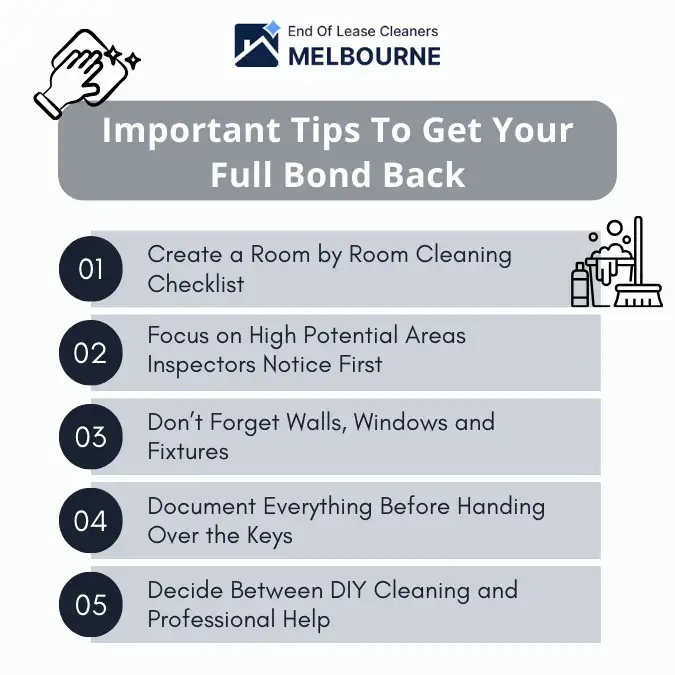
Infographic For Important Tips To Get Your Full Bond Back
Wrapping Up
Getting your full bond back is less about deep cleaning everything blindly and more about cleaning strategically. Understanding inspection expectations, focusing on high risk areas, and staying organised can make a significant difference. Whether you choose a DIY approach or professional end of lease cleaning Melbourne services, the goal remains the same: leaving the property clean, presentable, and inspection ready.