Vacating a rental home in Victoria is more than packing up household belongings. Tenants are responsible for returning the property in a reasonably clean condition beyond normal wear and tear. Due to the stress of securing hard earned bond money, they often lack making the right decision when outsourcing the most reliable cleaning service.
Tenants often get confused between deep cleaning vs standard bond cleaning at the end of a tenancy. While both services focus on delivering spotless results, they serve very different purposes. In fact, the approach differs when performing both services.
Fret not! We bring you a comprehensive guide to help you understand the key differences between deep vs standard bond clean. This will help you avoid last minute chaos, inspection failures, unwanted recleans and bond deductions. Learn when to book these services to make the most of your decision.
- What Does Deep Cleaning Mean?
- What is a Standard Bond Cleaning/End of Lease Cleaning?
- Understanding the Purpose: Deep vs Bond Clean
- What’s Included in a Standard End of Lease Clean vs Deep Clean
- Bond Cleaning Obligations Compared to Detailed Cleaning
- Time and Energy Required: Understanding the Difference
- Repercussions of Inadequate Deep Clean vs Bond Clean
- What’s the Price Difference
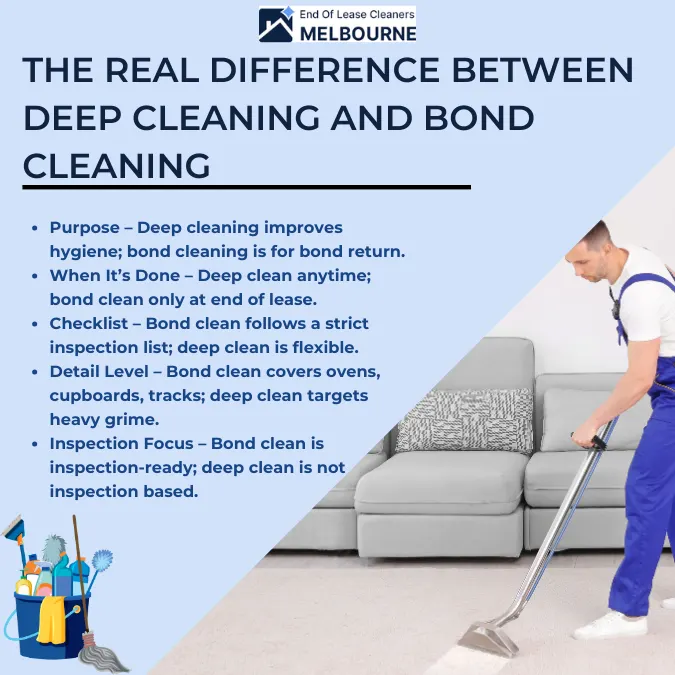
- Infographic On The Real Difference Between Deep Cleaning And Bond Cleaning
- Wrapping Up
1. What Does Deep Cleaning Mean?
A deep cleaning is an intensive process that removes accumulated dust, dirt, stubborn stains, cooking grease, gunk, and mould from the entire house. It basically targets the most overlooked, high touch, and difficult to reach areas that are often missed during a regular cleanup session.
You can book a deep house cleaning service every six to nine months or hire experts if your home hasn’t been professionally cleaned for a long time.
2. What is a Standard Bond Cleaning/End of Lease Cleaning?

It is a highly specialised, professional grade one-time cleaning session, which is performed when tenants are moving out of a rental property. The focus is on meeting the landlord’s strict cleaning standards, covering all nooks and crannies as required by the lease agreement and cleaning clauses.
Tenants are required to hand over the property in a reasonably clean condition, and that’s why they prefer hiring experts for a top quality end of lease cleaning Melbourne. A standard bond clean has some basic inclusions and exclusions that must be addressed before hiring any company.
3. Understanding the Purpose: Deep vs Bond Clean
Deep cleaning is usually carried out either when preparing your home for spring, after a renovation, or before a Christmas or New Year's Party. Homeowners also hire experts to target hard to reach and often missed spots. The sole aim is to maintain a clean, healthy and hygienic space without mould and mildew.
Bond Cleaning, on the other hand, is always performed at the end of a tenancy. The sole aim is to help tenants secure their full bond money without any unfair deductions or disputes. Cleaning according to the pre-approved checklist is the ultimate goal to secure bond money.
4. What’s Included in a Standard End of Lease Clean vs Deep Clean
Under the rental tenancy laws in Victoria, renters need to hand over the property to its original state as it was at the start of a lease. When you hire end of lease cleaning Melbourne experts, you can expect the following areas in a standard checklist:
- Cobwebs on ceiling walls, air vents, fans, light fixtures and fittings
- Cupboards, shelves and drawers top, inside and outside
- Windows, blinds and curtains
- Door tracks and frames
- Kitchen cabinets, handles and exhaust fans
- Rangehood and filters
- Oven, BBQ, refrigerator and microwave
- Degreasing stovetop, countertops and backsplash
- Disinfecting the sink and faucets
- Removing soap scum from bathroom fixtures and fittings
- Cleaning bathroom walls and tiles
- Vacuuming carpets and rugs
- Outdoor cleaning
- Sweeping and mopping floors
On the other hand, deep cleaning includes a customised checklist and mainly covers most neglected areas or mould infested spots. It targets:
- Washing of walls
- Scrubbing stubborn stains and builtup grease from hard surfaces
- Steam cleaning carpets
- Cleaning kitchen appliances inside and out
- Thoroughly cleaning ceiling fans, vents and light fixtures
- Cleaning skirting boards, grout lines and underneath heavy appliances
- Eliminating rust stains, hard water stains and mould
- Vacuuming and disinfecting mattresses and rugs
- Sweeping and mopping floors
Deep cleaning is recommended for poorly maintained properties as it is more intensive and detailed.
Tip: A standard bond cleaning package may not include certain tasks or areas, such as deep cleaning of carpets, upholstery or pressure washing. These services can be added as extras and quoted separately to secure your bond money.
5. Bond Cleaning Obligations Compared to Detailed Cleaning
There is no denying that end of lease cleaning in Victoria is a legal obligation for a tenant. Failing to meet the pre determined cleanliness standards can lead to bond deductions and penalties. Plus, landlords must adhere to strict checklists when conducting a rental inspection to check for dirt and existing damage. They compare the current condition with the entry condition report and make a decision based on it.
On the contrary, deep cleaning isn’t required by law. However, it demands higher cleanliness and hygiene standards to keep germs and grime at bay. Experts create a customised cleaning checklist and clean depending on the condition and neglected areas.
In short, bond cleaning is legally compliance and checklist based, whereas deep cleaning is detail oriented and optional.
6. Time and Energy Required: Understanding the Difference
A standard end of lease cleaning usually takes four to 10 hours, depending on the property’s size and condition. The focus is more on cleaning commonly inspected areas. Conversably, deep cleaning is far more intensive and time consuming. It involves thorough scrubbing, stain removal, grease breakdown and cleaning of hard to reach areas. This demands extra effort and specialised tools, and more time to achieve meticulous results.
7. Repercussions of Inadequate Deep Clean vs Bond Clean
Believe it or not! Selecting the wrong cleaning types or substantial cleaning can lead to bond deductions, expensive recleans or even penalties. Many people end up hiring a deep cleaning service when moving out of a lease. It is detailed but doesn’t guarantee bond if mandatory checklist areas are missed.
As a responsible tenant, make sure you book a guaranteed end of lease cleaning Melbourne service that comes with a bond back guarantee (Ts and Cs apply) and a free re clean in case of missed spots. This will help you claim your bond back without any stress.
In case of unfair deductions, you can apply to RDRV to raise a dispute. If mediation doesn’t work, apply to VCAT along with evidence like time stamped photos and videos, professional cleaning receipts, etc, to reclaim your bond.
8. What’s the Price Difference
This depends entirely on the company you choose, the additional services you include, and other crucial factors. In Melbourne, a standard end of lease cleaning starts at $50 per hour with a bond back guarantee for seven days (Ts and Cs apply). However, the estimated cost may vary depending on the size and condition of a rental property.
On the other hand, the estimated price of deep cleaning depends on the condition of the property. It is always good to contact the experts and get a free, no-obligation quote to make an informed decision.
Infographic On The Real Difference Between Deep Cleaning And Bond Cleaning
Wrapping Up
Both deep cleaning and standard bond cleaning are all intensive but tend to serve different purposes. If you are moving out of your rental home, book a specialised end of lease cleaning service. A detailed checklist adheres to pre-approved cleaning standards, refers to the initial condition report and focuses on returning the property to a reasonably clean condition.
Deep cleaning, conversely, deep cleaning focuses on achieving the highest level of cleanliness by targeting neglected and stain laden areas. However, it doesn’t follow a pre approved cleaning checklist or consider PCR, which may lead to bond deductions. So, be careful when hiring experts for your bond.