Grease stains can be one of the most difficult and irritating messes in your home. These nasty stains are not only difficult to remove, but can also be damaging if a surface is not treated properly. Regardless of whether it is a kitchen countertop, fabric, tiles, or wooden flooring, grease stains from cooking oil, butter, or oily foods will all require specific methods for effective removal.
Grease spots over time become sticky and attract dirt, making it more difficult to combat. So, it is good to act promptly using the right techniques to prevent scratches, discolouration and damage to the surface, especially delicate ones. This blog will offer safe and effective guidance on removing grease stains from various surfaces. It also covers how to select the correct cleaning agent for the surface being treated.
1. Removing Grease from Kitchen Countertops
Grease builds up on kitchen countertops so quickly. The daily cooking splashes can repeat the greasy layer that accumulates and attracts additional dust. Laminate tops and stone tops will have very different options for cleaning!
Begin by wiping and scraping the entire surface area with a dry paper towel. This removes the surface of various oils and loose dirt. For laminate tops, mix a small amount of warm water with a few drops of dish soap. With your sponge, begin scrubbing in a circular manner. Try to use as little force as possible. A strong cleaner can wear down the laminate's finish. Also, professional end of lease cleaning Melbourne experts help in cleaning hard to reach areas with perfection. Their experience reduces the risk of damage to sensitive surfaces.
For stone benches, employ a pH neutral cleaner. Stone surfaces are sensitive to other potentially reactive elements; as such, vinegar and lemon must not be introduced to avoid a terrible, permanent reaction with stone. Soft microfiber cloths are a better option for wiping grease on natural surfaces, but repeat the process until a greasy film vanishes.
2. Tackling Greasy Walls and Tiles
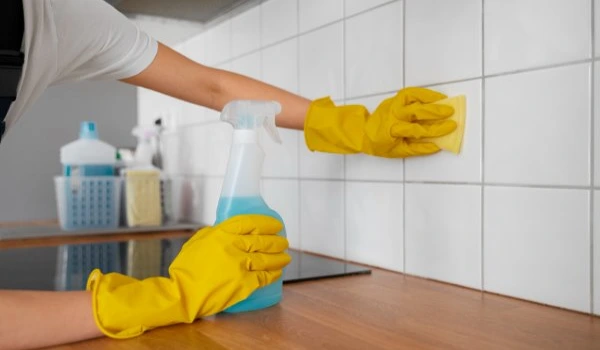
Walls near cooking areas are common spots for grease buildup. Tiles may look clean from a distance, but can hide sticky residue between joints.
- Prepare a mix of baking soda and water.
- Make a smooth paste and apply it over the stained areas.
- Let it sit for ten minutes before wiping it off.
- This paste helps break down grease without scratching the tile.
For painted walls, avoid harsh scrubbing. Use a mix of mild dish soap and warm water. Dampen a soft sponge and lightly clean the stained area. Do not soak the wall to avoid peeling paint. Repeat if needed. Professional cleaners also perform the same task when clearing the end of lease in Melbourne to help tenants avoid rental disputes over property condition.
3. Treating Grease on Clothes and Fabrics
Grease on fabric is frustrating. If left untreated, it can leave a permanent mark. Clothes made from cotton and synthetic fibres require different treatment.
Blot the stain with a tissue to absorb extra oil. Sprinkle baking soda or cornstarch over the area. Let it sit for ten to fifteen minutes. This helps absorb the grease.
Gently brush off the powder and apply dishwashing liquid to the spot. Rub it gently using fingers or a soft brush. Rinse with warm water and wash the fabric as usual. Check the stain before drying. Heat can make it harder to remove if not cleaned properly, which may raise issues during a property inspection.
4. Degrease Wooden Surfaces
Wood can absorb grease if not sealed properly. That’s why fast cleaning is important. Oily stains can leave dark marks on light colored wood.
Start by wiping the area with a dry cloth. Mix vinegar with warm water in small amounts. Dampen a cloth and gently wipe the surface. Do not soak the wood as it may swell.
If the stain is still visible, use a mixture of baking soda and water. Apply it over the mark and leave it for five minutes. Wipe it off with a clean, damp cloth. Always dry the wooden surface properly after cleaning. Including this step in your cleaning checklist will help you clear the bond during the end of lease cleaning Melbourne.
5. Handling Grease inside the Oven
Oven interiors often laden with baked on grease that is hard to remove. Commercial sprays may help, but natural solutions are also effective.
Make a paste with baking soda and water. Spread it evenly inside the oven, avoiding heating elements. Leave it overnight for best results. The paste will loosen the grime and sticky oil.
Wipe away the paste using a damp sponge. Use a vinegar spray to clean the remaining residue. Regular oven cleaning helps prevent infestations and mould, leaving the appliance clean and ready for use again.
6. Why Professional Help Makes a Difference
While home methods work for minor stains, built up grease may need professional attention. Expert cleaners use surface specific agents and techniques to ensure damage free cleaning. When properties are vacated, even minor grease stains can lead to deductions. Hiring a professional deep cleaning service becomes important in such cases.
Trained teams under advanced lease cleaning services use eco friendly products and effective tools. This helps remove heavy grease deposits from kitchens and other living spaces.
Detailed grease or mould removal strategies are a crucial component of high quality cleaning packages. Many tenants prefer expert help to maintain bond guarantees. Property owners also benefit from reliable end of lease cleaning Melbourne teams. Clean homes attract better tenants and reduce turnover hassles.
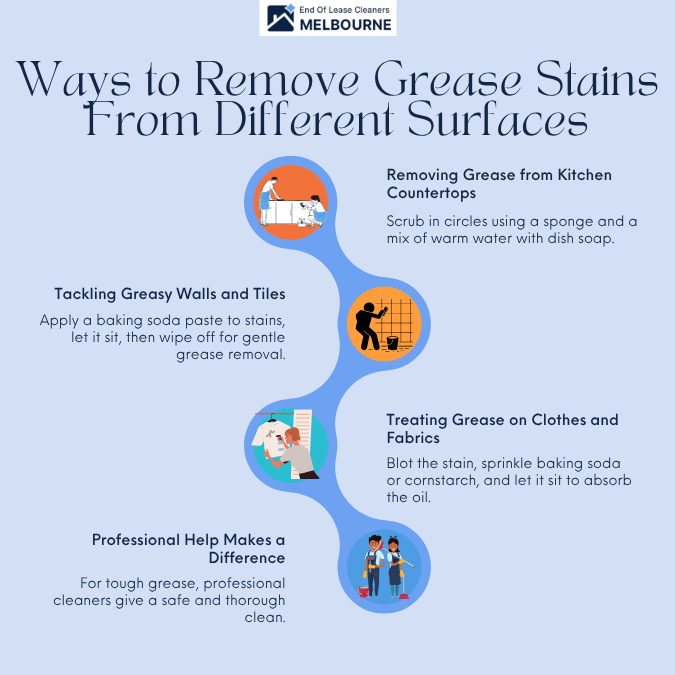
Ways to Remove Grease Stains From Different Surfaces
Wrapping Up
Grease removal may look easy, but it needs careful handling. Using the right method for each surface avoids damage and improves cleaning results. Simple home techniques often work, but deep stains may require expert attention. With proper care and the right tools, any greasy mess can be cleaned without stress or damage to the surface.