Pressure washing is one of the best methods to restore the shine and finish of exterior surfaces. It is the one stop solution for cleaning driveways, decks, fences, patio tiles, roofs, garage floors, exterior windows, swimming pools and other concrete surfaces of your home. Not only does it boost the kerb appeal, but it also prevents expensive structural damage caused by moss, algae, mould and other grime.
Whether sprucing up your outdoor area post renovation or preparing for the rental inspection, the right technique for pressure washing can make a world of difference. It is important to know how the pressure washer works and eliminates stubborn stains and buildup from different surfaces. However, it may lead to accidents if not handled properly. Worry not! Here is a comprehensive guide to pressure washing for high-quality results. The best part is that you don't need strong chemicals or other expensive tools to get started. You can transform your exterior areas like a pro with basic cleaning supplies and a consistent water supply.
Let’s Get Started!
- What Does Pressure Washing Mean?
- Electric Vs Gas: Choosing The Right Pressure Washer
- Pressure Cleaning Safety Measures
- Clear the Path Before Cleaning
- Pre-Treat the Stubborn Stain: Using Mild Detergents and Vinegar
- Master the Art of Pressure Washing Techniques: Multiple Surfaces
- Cleaning Tips for Pressure Washing
- Wrapping Up
1. What Does Pressure Washing Mean?
It is a high powered washing method to remove dirt, grime, mould, mildew, oil stains, and algae build up from various concrete and sturdy surfaces. You can achieve spotless results without scrubbing or rubbing filthy surfaces. It can restore the pristine look of your driveways, fences and roofs in a breeze. You can even deep clean your vehicles using this efficient method.
If you are at the end of your tenancy, add a professional pressure washing service to a cheap end of lease cleaning Melbourne package to leave a great impression on your landlord.
2. Electric Vs Gas: Choosing The Right Pressure Washer
Below are two types of pressure washers. You can choose depending on your budget and specific requirements:
Electric pressure washers are easy to operate due to its light weight. It makes it super easy to remove mild stains and grime from vehicles, patio furniture. If you want a pressure washer for your home, opt for an electrical one and keep your exterior surfaces shiny all year round.
Gas pressure washers are powerful. These are perfect for tackling stubborn stains and large driveways, commercial spaces, decks and concrete floors.
Tip: It is wise to invest in a washer based on the intensity of your cleaning requirements.
3. Pressure Cleaning Safety Measures
Pressure washing can lead to injuries or costly repairs if not handled carefully. Consider these safety measures to prevent consequences:
- Wear protective gear, including gloves, shoes and eyewear
- Use the right nozzle for each surface and cleaning job
- Turn on the safety lock when not in use
- Prevent the electrical cords and machines from water resources
- Never run the machine over animals or fragile items
- Follow the manufacturer’s instructions for safe handling
4. Clear the Path Before Cleaning
It is pivotal to increase the efficiency and effectiveness of pressure washing session. All you need to do is to preparing the surface before using water. When cleaning outdoors, remove patio furniture, plastic pots, plants and loose stuff. Also, cover electrical outlets, fixtures and fittings to prevent electrical hazards using waterproof plastics.
Professional end of lease cleaning Melbourne experts recommend proper dusting to remove visible dust and grime. You can rinse or wipe the surface. This will help you access stubborn stains, algae and mould in a breeze.
5. Pre-Treat the Stubborn Stain: Using Mild Detergents and Vinegar
Driveways, fences, decks and patio furniture with stubborn stains and mould need pre treatment before pressure washing. You can make a mild DIY agent with dishwashing soap, white vinegar and warm water. Let it soak for half an hour to break down oil stains, grime and grease. You can also use soda crystals, baking soda, hydrogen peroxide and other natural cleaners for effective results.
6. Master the Art of Pressure Washing Techniques: Multiple Surfaces
Every surface needs specific techniques to achieve spotless results without causing any damage or dullness to the surface. These include:
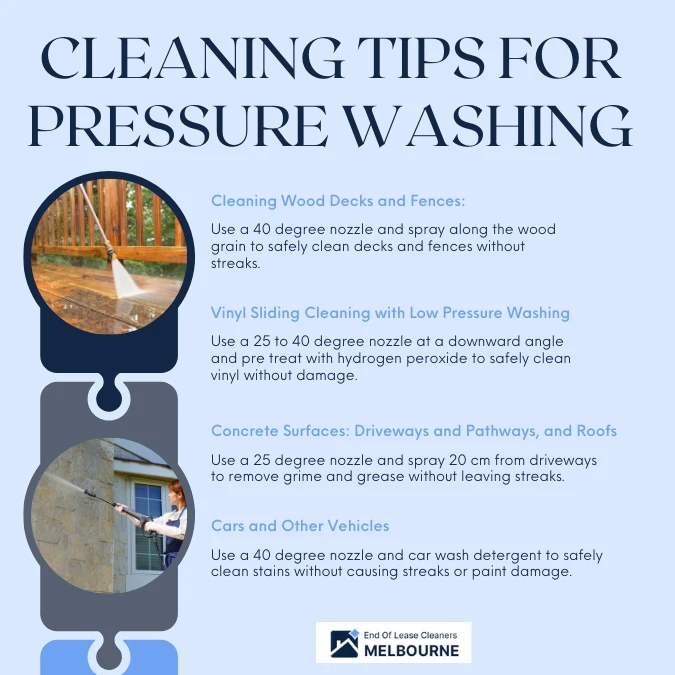
Cleaning Wood Decks and Fences:
You should always use a low pressure nozzle (40 degree) when removing stubborn stains from wooden surfaces like fences and decks. This will spread water evenly for effective results. It is good to hold the spray 10-12 inches from the decks and move in steady strokes for effective results. Ensure you spray water towards the wood grain direction to prevent nasty streaks. This will help prevent injuries.
Vinyl Sliding Cleaning with Low Pressure Washing
A water spray or nozzle 25 to 40-degree tip can help prevent permanent damage. You should always work downwards at a 45 degree angle and keep the nozzle at least 3 feet from the surface to prevent stripping or cracking of vinyl. For mildew and mould stains, pre treat the area with hydrogen peroxide before using a pressure washer.
Concrete Surfaces: Driveways and Pathways, and Roofs
Use a medium pressure nozzle of 25 degrees to tackle stubborn stains, heavy soil, grime, grease and algae from driveways. Keep the spray 20 cm from the surface and move slowly while dislodging gunk and grease. This won't leave streaks behind.
Cars and Other Vehicles
Always use a low pressure nozzle (40 degree) to prevent streaks and paint damage. It is always good to apply car wash detergent to pre treat the stains. Scrub it using a brush before rinsing it with a high-pressure washer.
Tip: Start with a wider nozzle and conduct a patch test on a hidden area to prevent costly repairs.
Cleaning Tips for Pressure Washing
Wrapping Up
Exterior cleaning becomes easy with the help of this guide. Unlike traditional cleaning methods and extensive scrubbing, pressure washing saves time and energy. It can help remove stubborn stains, grime and mould buildup from various concrete, brick and other hard surfaces. Choose the best machine and follow the right cleaning techniques for different surfaces to achieve spotless results.